Co-Fabricating a Dual-Material Polymer Impeller Assembly
Reverse Engineering | Prototyping | Industrial Polymer Additive Manufacturing
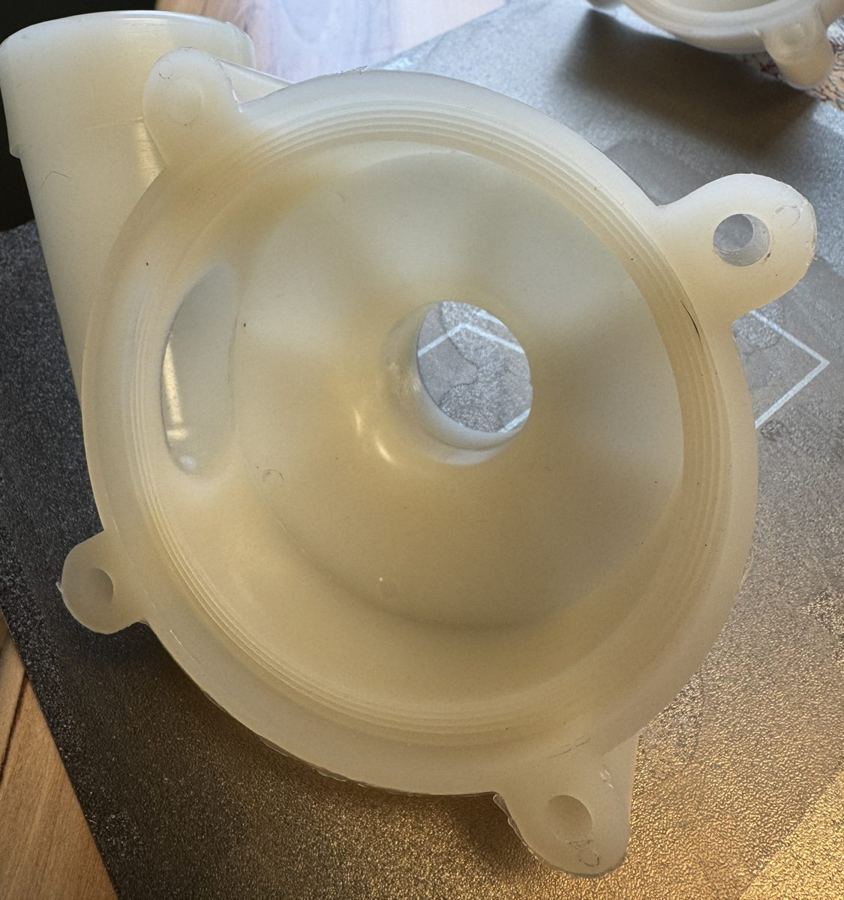
Replacing a machined stainless steel shaft and molded polymer impeller with an integrated composite polymer assembly, developed as a field-use candidate.
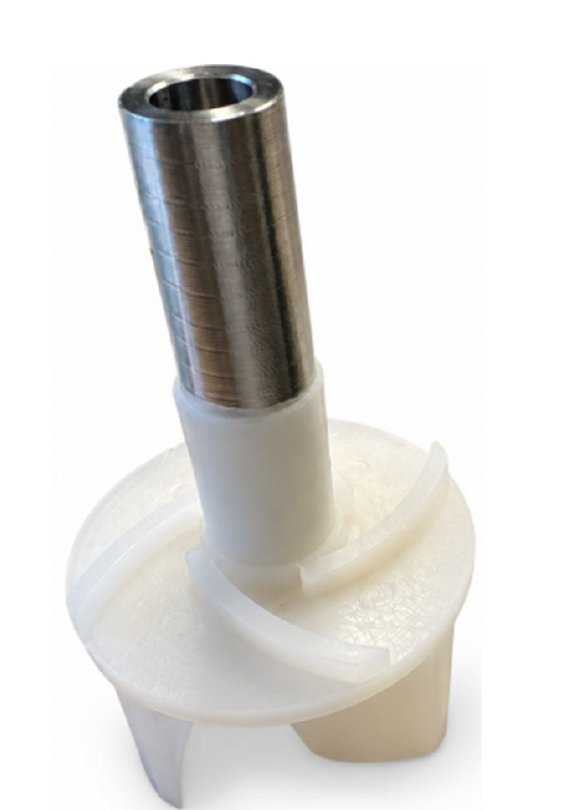
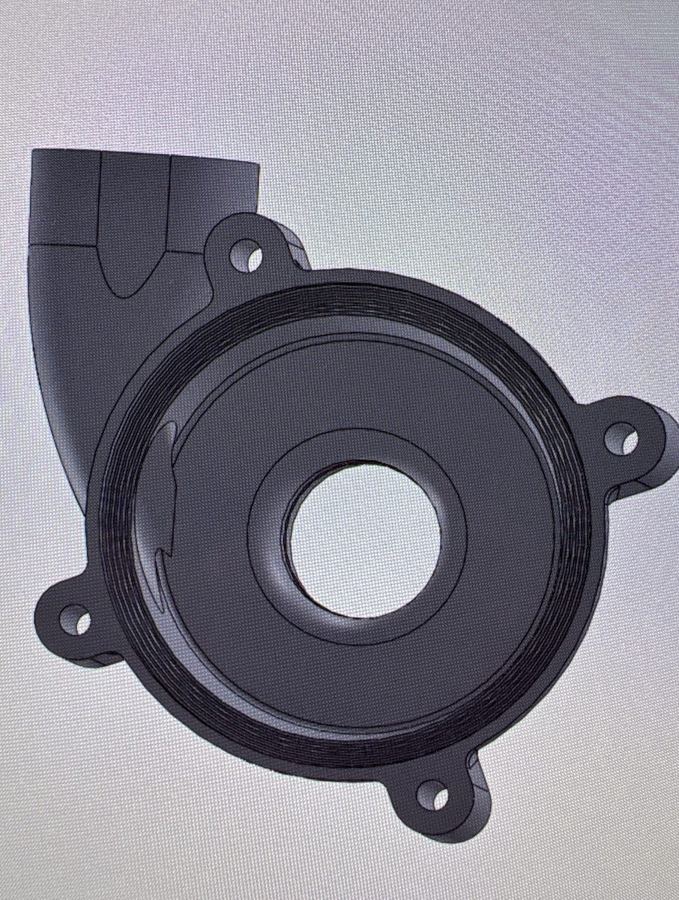
Original: polymer impeller molded onto a stainless steel shaft
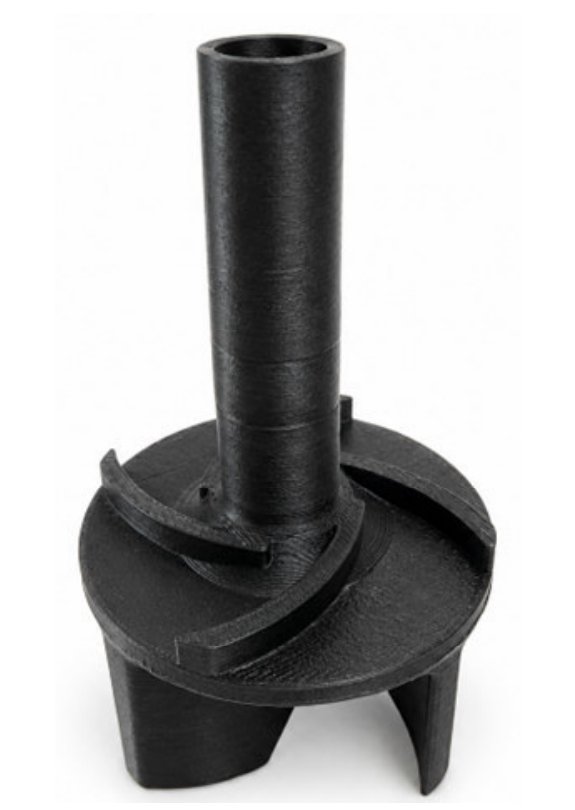
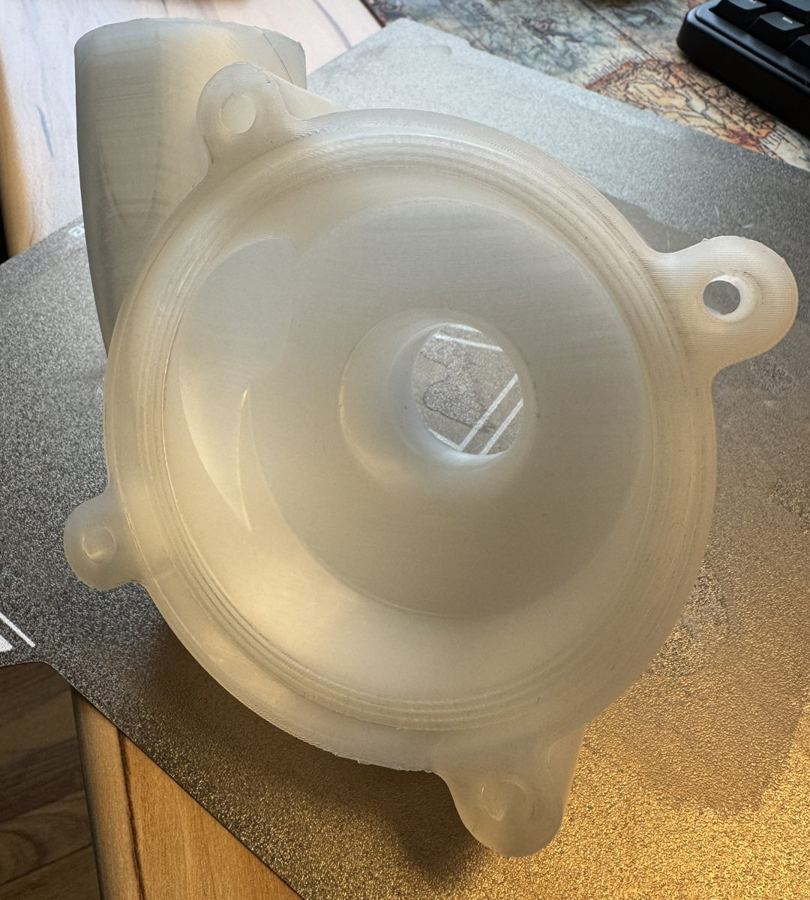
Re-engineered: dual-material composite, printed with industrial FFF
The Challenge
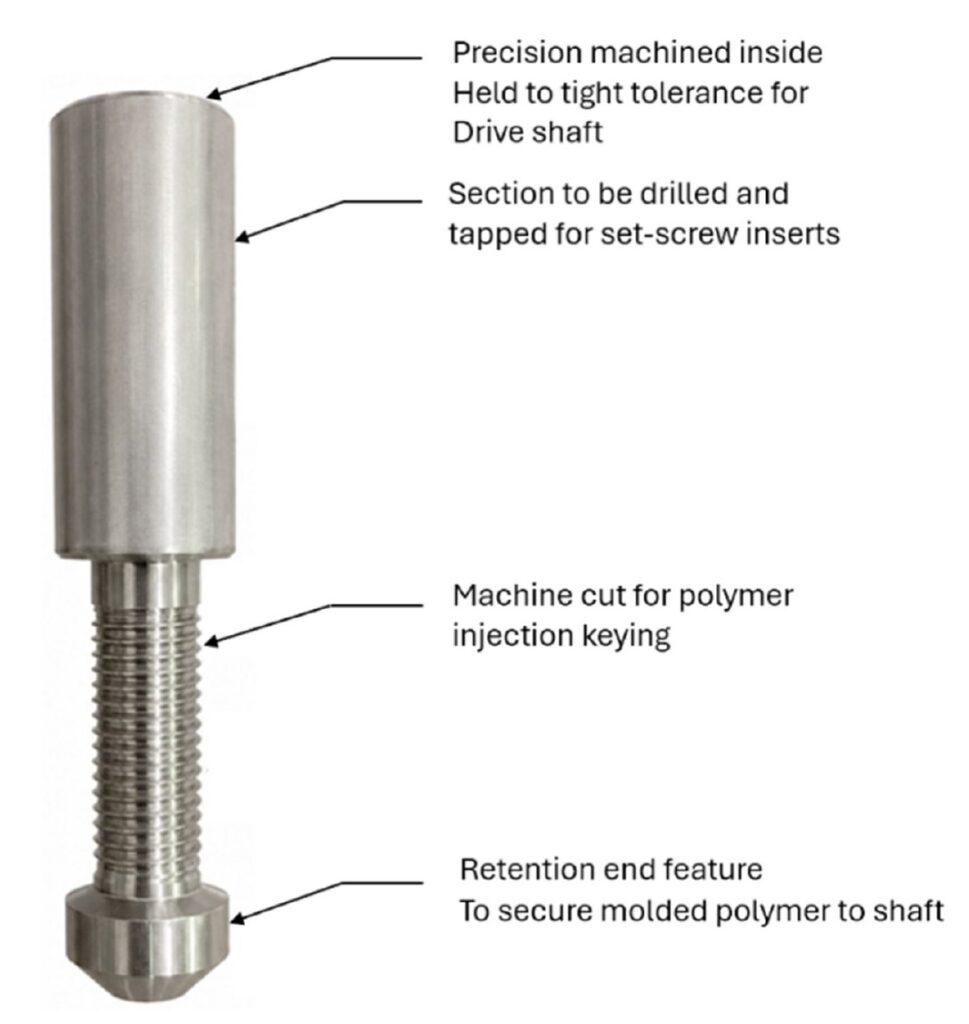
The original assembly was a molded polymer impeller built around a precision-machined stainless steel shaft. Making it took several separate operations and suppliers: CNC machining of the shaft, machining for polymer keying, injection molding the impeller onto the shaft, then drilling and tapping for set screws and machining the seal area.
We approached it as a reverse-engineering and design-for-manufacturing problem, not a copy job: understand what the assembly needs to do, then redesign it around material behavior, load path, chemical and temperature exposure, and what industrial FFF can do.
The Re-Engineered Assembly
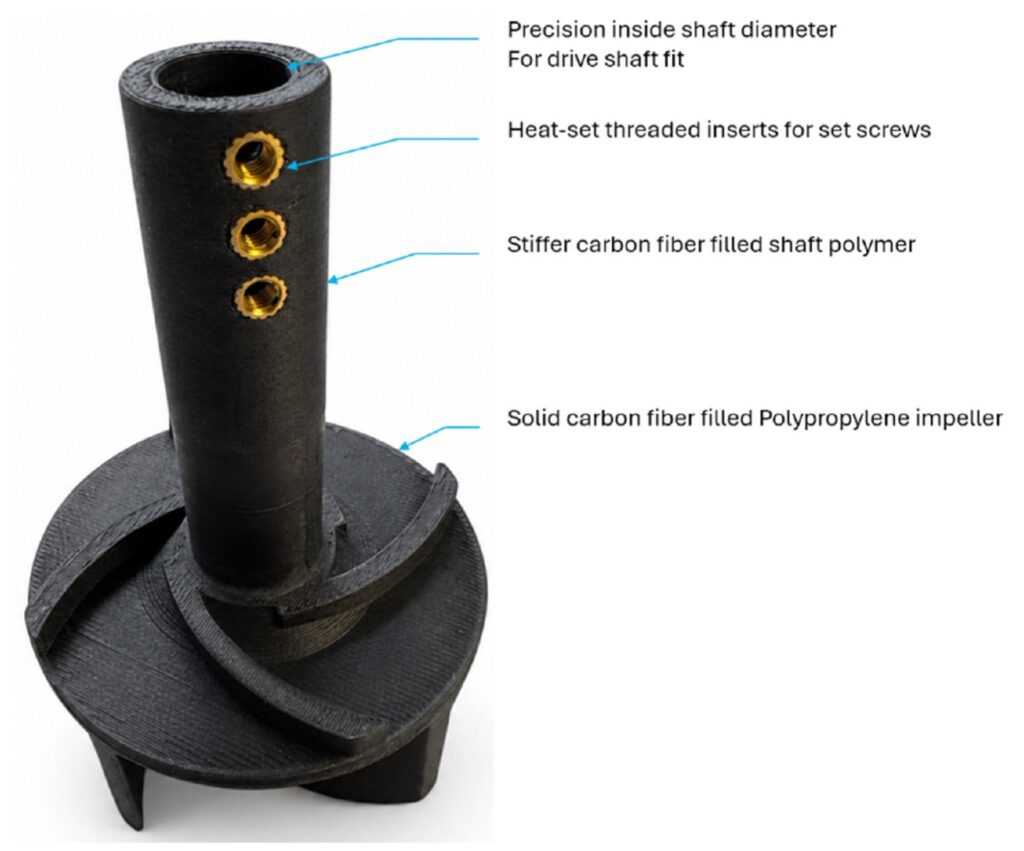
The impeller body is printed in carbon fiber-filled polypropylene for chemical compatibility, temperature capability, and harsh environments. In the same print, a stiffer carbon fiber-filled polyamide composite is co-fabricated into the core, forming the shaft and extending into the hub for rigidity, internal support, and mechanical engagement between the two materials.
Heat-set threaded inserts in the printed shaft take the set screws, removing the drilling and tapping step. Replacing the stainless shaft also reduces rotating mass, which lowers the load on the drive, shaft interface, bearings, and seals during startup, stopping, and speed changes.
Original stainless shaft before molding
Re-engineered dual-material assembly
Original
- Machined stainless steel shaft
- Molded polymer impeller
- Drilling and tapping after molding
- Seal-area machining
- Several supplier-dependent operations
Re-Engineered
- Carbon fiber-filled polypropylene impeller body
- Co-fabricated high-stiffness composite shaft
- Integrated threaded inserts
- Reduced rotating mass
- Fewer secondary operations
Result
The final prototype was developed as a field-use candidate, evaluated for fit, function, stiffness, material behavior, manufacturability, and rotating mass reduction. A multi-step stainless steel and molded polymer component became a single co-fabricated dual-material composite part.
Customer-specific details, proprietary dimensions, interface geometry, and print strategy have been intentionally omitted.